1964
Mafalda appears for the first time
Quino's comic strip about a six-year-old girl worried about world peace debuted in an Argentine magazine and became a classic read across continents.
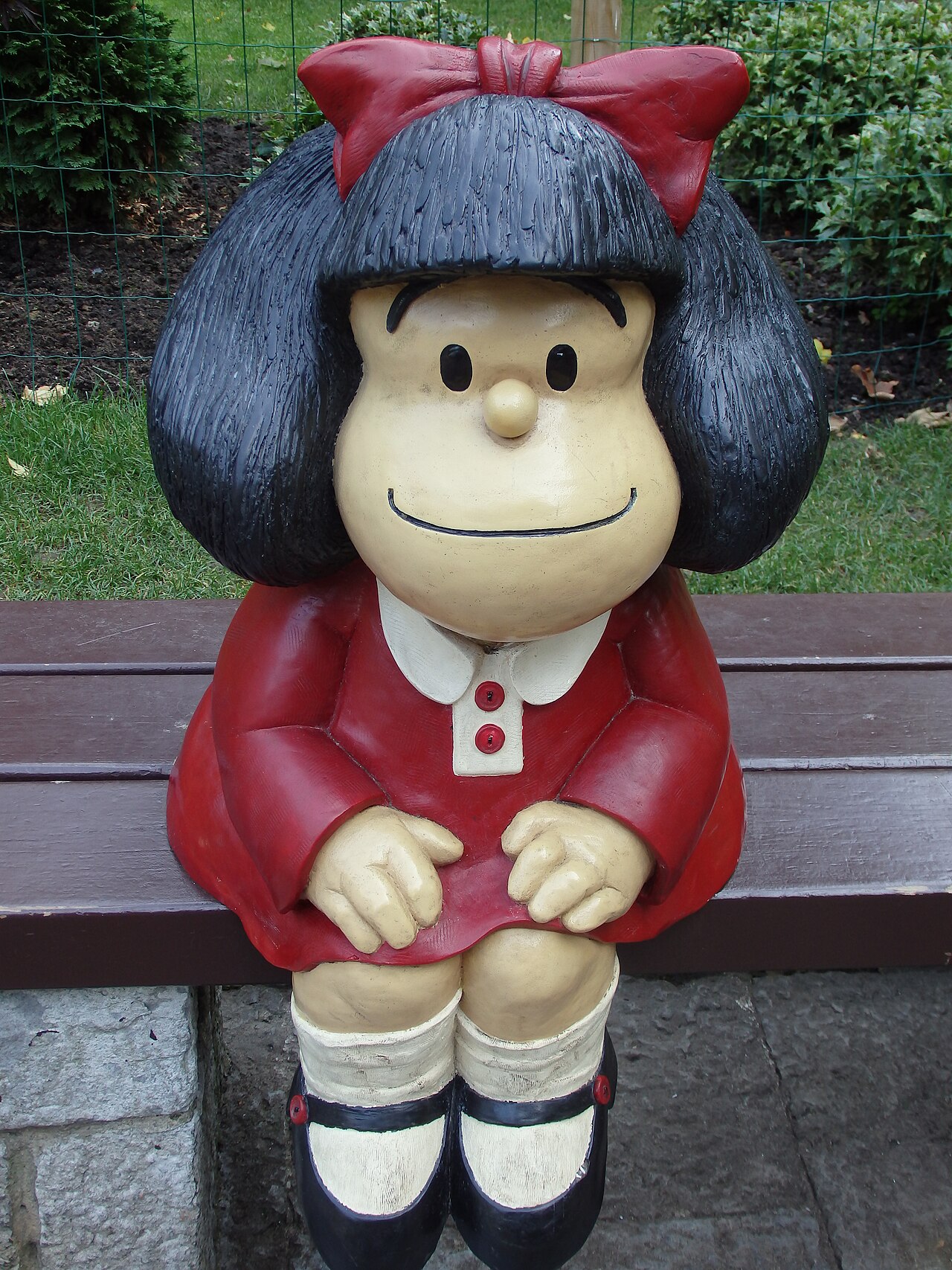
On September 29, 1964, readers of the Argentine news magazine Primera Plana met a small girl with a big bow and bigger questions. Mafalda, the creation of the cartoonist Quino, is six years old, hates soup, and worries constantly about humanity and world peace. In her first strips she appeared only with her parents, a quiet middle-class couple often left speechless by her questions.
The character had an unusual start. In 1963, Quino was asked to draw a strip that would secretly advertise the Mansfield line of products made by the Siam Di Tella company, with characters whose names all began with the letter M. He named his heroine after a character in the 1962 Argentine film Dar la cara. The newspaper Clarín turned the idea down once it noticed the advertising angle, and the campaign never happened. A year later, Julián Delgado, an editor at Primera Plana, offered to publish the strip if Quino removed the advertising.
The cast grew over time. Felipe, a dreamy boy terrified of school, arrived in January 1965. When Quino moved the strip to the newspaper El Mundo that year, he added Manolito, the grocer’s son obsessed with business; Susanita, who dreams only of marriage and motherhood; and Miguelito. Later came Mafalda’s little brother, Guille, and Libertad, a tiny and fiercely political friend. The strip ended for good on June 25, 1973.
Why it matters
Mafalda gave Latin America one of its sharpest voices of social satire. Through a child’s eyes, Quino commented on politics, inequality, war, and the habits of the Argentine middle class, and the strip became very popular in Latin America, Spain, Quebec, and parts of Asia. It has been translated into around 20 languages and collected in a series of books, and it inspired two series of animated shorts.
Umberto Eco compared Mafalda with Charlie Brown in 1968, and Quino acknowledged that he had studied Charles Schulz’s work. Unlike Peanuts, though, Mafalda gives adults a central role, rooting the strip in family life. Life-size statues of the character stand in Buenos Aires, in front of Quino’s former home in San Telmo, and in Oviedo, Spain, where one was installed after Quino received a Princess of Asturias Award.
Did you know?
After the strip ended, Quino still drew Mafalda on occasion, mostly to promote human rights, including illustrations for UNICEF.