1547
Miguel de Cervantes is born
The future author of Don Quixote was born in Alcalá de Henares, beginning a life of war, captivity, and hardship that shaped the first modern novel.
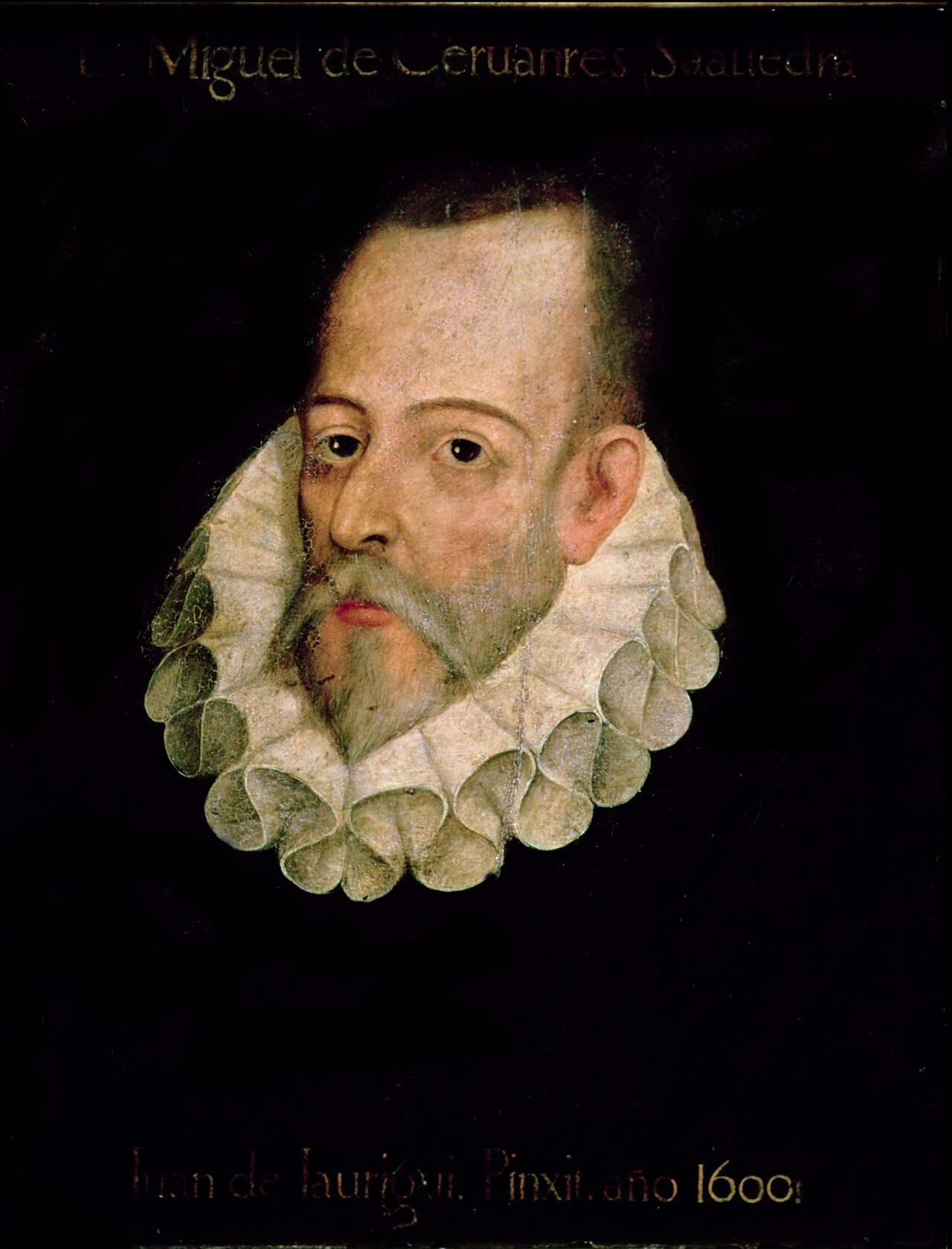
Miguel de Cervantes is generally believed to have been born around September 29, 1547, in Alcalá de Henares, a university town near Madrid. No record fixes the exact day, and many details of his life remain uncertain, from his family background to his appearance. He was the second son of Rodrigo de Cervantes, a barber-surgeon who was often in debt and always on the move, and Leonor de Cortinas, a resourceful woman who could read and write and who kept the family going while her husband was jailed for debt. The family lived in Córdoba and Seville before settling in Madrid in 1566.
His early adulthood reads like an adventure story. In 1569 a warrant was issued for the arrest of a Miguel de Cervantes for wounding a man in a duel, the most likely reason he left for Rome, where he served in the household of a future cardinal. He then joined a Spanish infantry regiment in Naples and fought at the Battle of Lepanto in October 1571, where the Holy League defeated the Ottoman fleet. He was wounded three times, and one injury left his left arm useless. In 1575, on his way home, Ottoman corsairs captured his ship and took him to Algiers, where he spent almost five years as a captive and made four escape attempts before the Trinitarian order paid his ransom in 1580.
Back in Spain he struggled to make a living. He published his first novel, La Galatea, in 1585, but worked for years as a purchasing agent for the Spanish Armada and as a tax collector, and he was briefly jailed over irregularities in his accounts.
Why it matters
Part One of Don Quixote appeared in 1605 and Part Two in 1615. Cervantes set out to mock the chivalric romances that readers had loved for more than a century, and his use of everyday speech and real life was new and instantly popular. The book is widely considered the first modern novel, and many writers have called it the best book ever written. Cervantes also wrote the Exemplary Novels, plays, and poetry. He is so closely tied to his language that Spanish is often called “the language of Cervantes,” and he is widely regarded as its greatest writer.
He died in Madrid on April 22, 1616, and was buried as a pauper in a Trinitarian convent, honoring the order that had freed him. His remains went missing in the 17th century and were identified by researchers only in 2015.
Did you know?
April 23, long thought to be the day Cervantes died, was actually the day of his burial. It is now celebrated as World Book Day.