1954
CERN is founded
Twelve European nations ratified the convention creating CERN, a shared laboratory that grew into the world's largest center for particle physics.
On September 29, 1954, the convention establishing the European Organization for Nuclear Research was ratified by 12 countries in Western Europe, and CERN formally came into being. The founding members were Belgium, Denmark, France, West Germany, Greece, Italy, the Netherlands, Norway, Sweden, Switzerland, the United Kingdom, and Yugoslavia. Less than a decade after the Second World War, these governments agreed to pool money and talent in a single laboratory for fundamental physics.
The groundwork had been laid two years earlier. In 1952, 12 European governments set up a provisional body, the Conseil Européen pour la Recherche Nucléaire, to plan the new laboratory. In its early years the council worked at the University of Copenhagen under the direction of Niels Bohr, and the convention itself was signed, subject to ratification, at a council session in Paris in mid-1953. When the provisional council was dissolved, the organization took a new French name, but the familiar acronym stayed. Werner Heisenberg reportedly remarked that it could remain CERN even if the name did not fit.
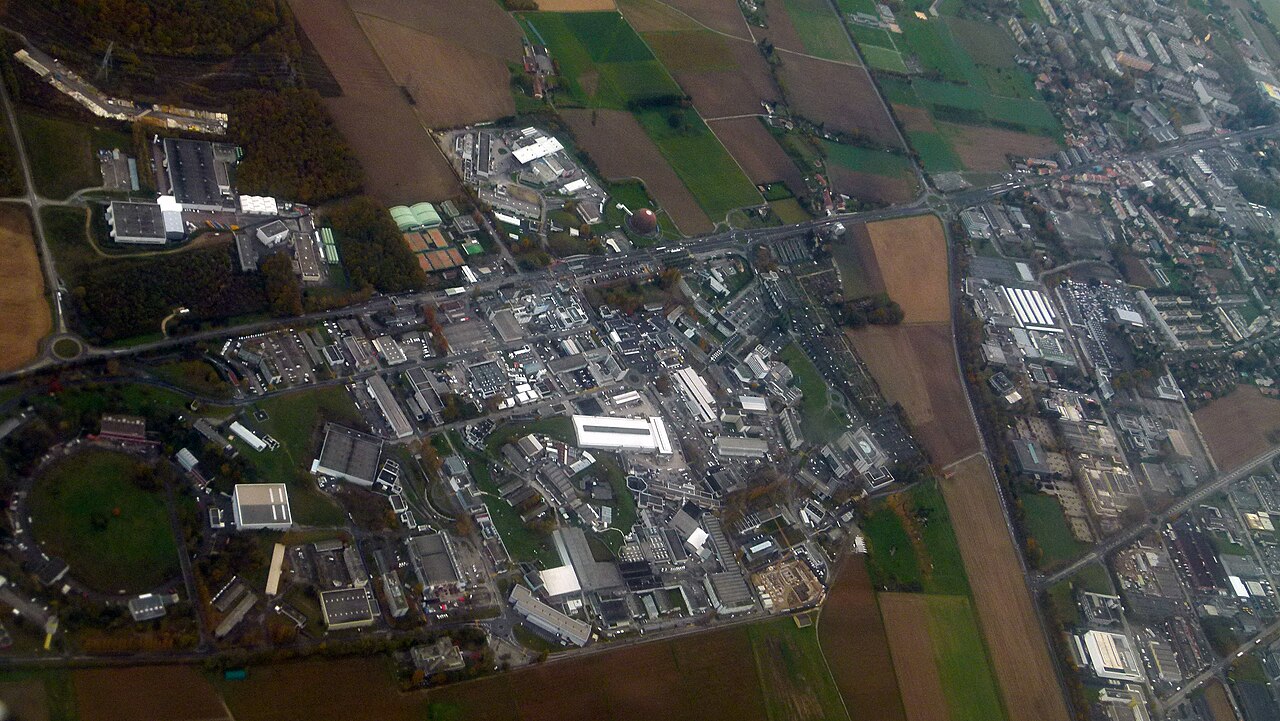
The laboratory settled in Meyrin, on the western edge of Geneva, right on the border between France and Switzerland. Its first director-general was the physicist Felix Bloch, and construction soon began on the Proton Synchrotron, an accelerator built between 1954 and 1959 that is still running as a feeder for larger machines.
Why it matters
CERN grew into the largest particle physics laboratory in the world, with 25 member states and thousands of scientists from more than 80 countries. Its experiments discovered the W and Z bosons in 1983, work that earned Carlo Rubbia and Simon van der Meer the Nobel Prize in Physics, and in 2012 CERN experiments found a boson consistent with the long-sought Higgs. The laboratory is home to the Large Hadron Collider, the world’s largest and highest-energy particle collider.
The laboratory’s impact reaches far beyond physics. In 1989, Tim Berners-Lee invented the World Wide Web at CERN as a way for researchers to share information, and in 1993 the organization announced that the web would be free for anyone to use. From its founding convention onward, CERN committed to publishing its results openly, a principle that still guides its open access and open data policies.
Did you know?
The main site at Meyrin was first built entirely in Switzerland, but since 1965 it has extended across the border into France. There is no obvious frontier inside the campus, only a line of marker stones.