1833
Ferdinand VII dies
The death of Spain's absolutist king left a daughter not yet three on the throne and a disputed succession that set off the Carlist Wars.
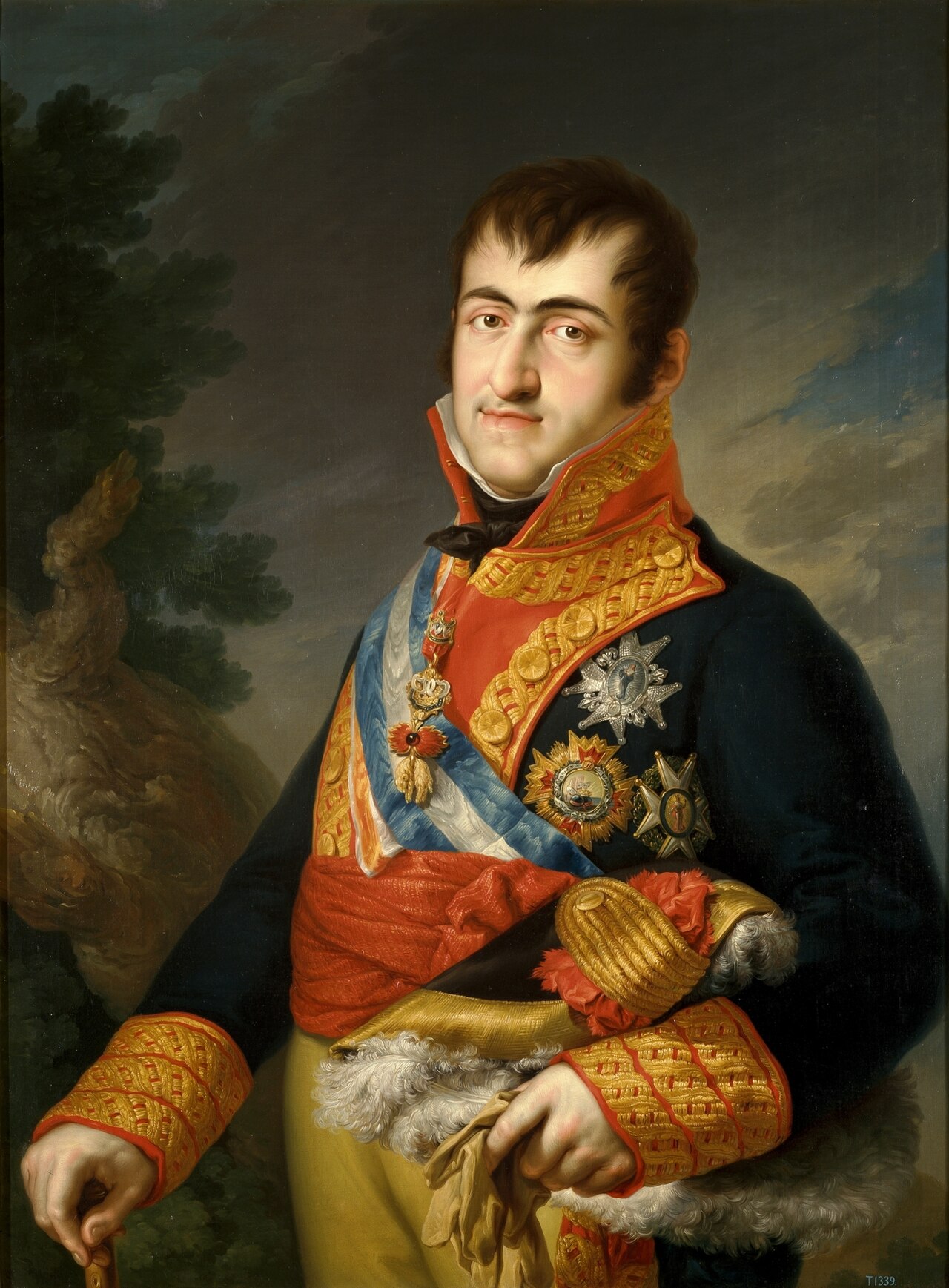
Ferdinand VII, King of Spain, died on September 29, 1833, two weeks before his 49th birthday. His reign was one of the most turbulent in Spanish history. Born at El Escorial in 1784, the eldest surviving son of Charles IV, he spent his youth shut out of government by his parents and their powerful favorite, Manuel Godoy, and in 1807 he was arrested for his part in a conspiracy that sought help from Napoleon.
He first took the throne in March 1808, after a riot at Aranjuez forced his father to abdicate, but within weeks Napoleon pushed him aside and installed Joseph Bonaparte as king. Ferdinand spent six years under guard at the Château de Valençay in France, while Spaniards fought the Peninsular War in his name and called him el Deseado, “the Desired.” When he returned in 1814, he quickly abolished the liberal Constitution of 1812, arrested its authors, restored the Inquisition, and ruled as an absolute monarch. A military revolt led by Rafael del Riego forced him to accept the constitution again in 1820, but in 1823 a French army restored his absolute power, and the last decade of his reign was marked by repression of all opposition.
His final years were shaped by the question of succession. In 1830 he published the Pragmatic Sanction, which allowed daughters to inherit the throne, and later that year his fourth wife, Maria Christina of the Two Sicilies, gave birth to a daughter, Isabella. The decree displaced his brother, Carlos, from the line of succession.
Why it matters
Ferdinand’s death turned that family dispute into a war. Carlos refused to accept his niece as queen and declared himself the rightful king. To defend Isabella’s claim, the regent Maria Christina turned to the liberals her husband had persecuted, issuing an amnesty in October 1833. Exiled liberals came home and dominated Spanish politics for decades, while the conflict with Carlos’s supporters grew into the Carlist Wars.
His reign also saw Spain lose most of its American empire, as the wars of independence swept across Spanish America. Historians have judged him harshly: Stanley G. Payne called him in many ways the basest king in Spanish history. After his return from France, the nickname “the Desired” gave way to el Rey Felón, “the Criminal King.”
Did you know?
Ferdinand married four times. Two of his wives were his nieces, and his last, Maria Christina, outlived him by 45 years.