1928
Opus Dei is founded
In Madrid, the young priest Josemaría Escrivá founds Opus Dei, a Catholic movement built on the idea that ordinary work can be a path to holiness.
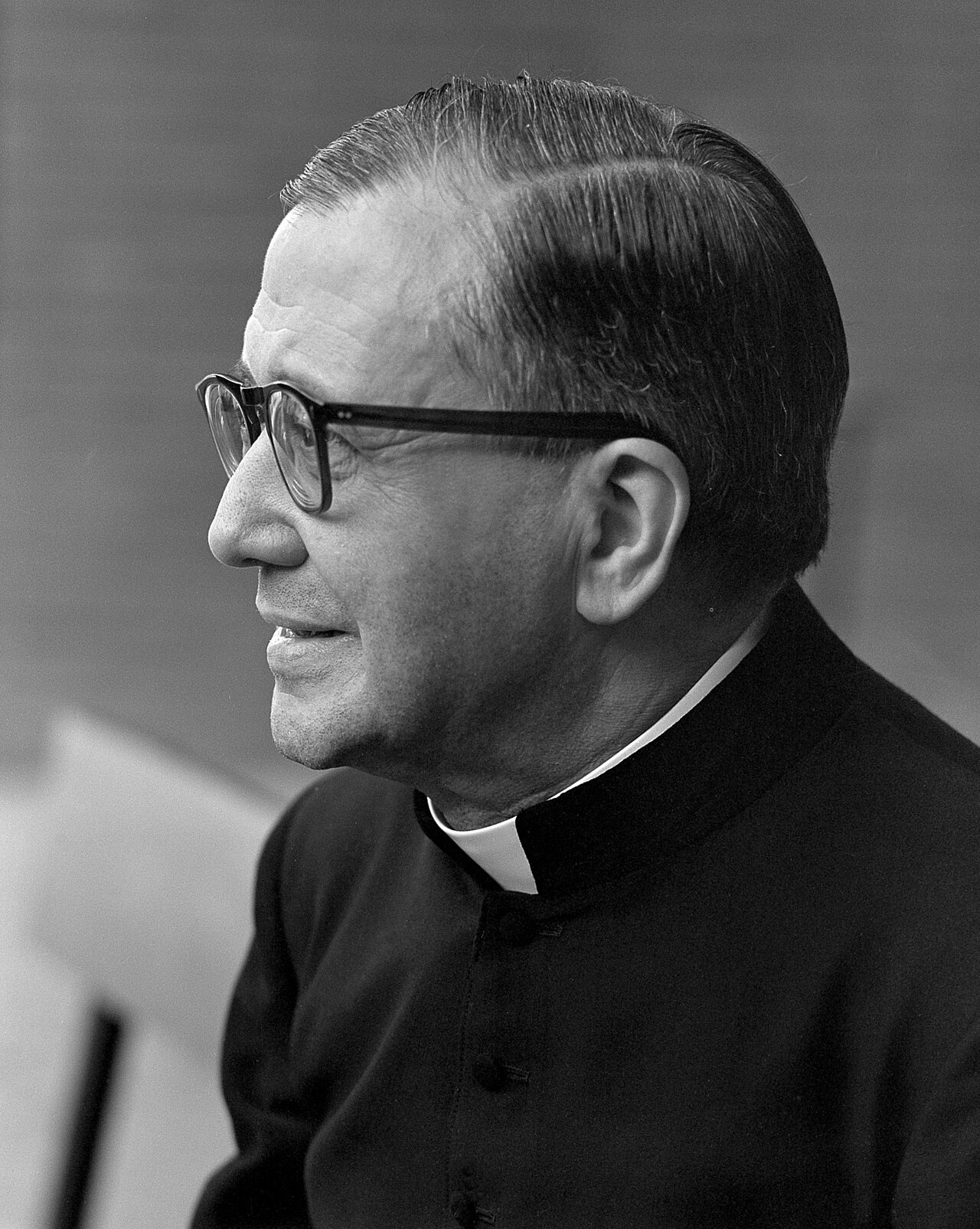
On October 2, 1928, in Madrid, a 26-year-old Spanish priest named Josemaría Escrivá had what he described as a vision. A period of prayerful retreat had been helping him discern his calling, and according to his own account, that day he “saw” Opus Dei, a way for Catholics to become holy through their secular work and everyday lives. He named it Opus Dei, Latin for “Work of God”, to stress that he saw it as God’s project rather than his own, and he held throughout his life that its founding had a supernatural character.
Escrivá, born in Barbastro in 1902, had been ordained in Zaragoza in 1925 and moved to Madrid to pursue a doctorate in civil law. In the early years he worked among the poor and the sick in the slums and hospitals of the city. Opus Dei began as a group for men only; in 1930, Escrivá opened it to women. During the Spanish Civil War he spent years in hiding and fled Madrid, returning in 1939, the same year he published The Way, a collection of 999 spiritual maxims for people living ordinary secular lives.
The group grew quickly in Francoist Spain and expanded abroad after 1945. Escrivá moved its headquarters to Rome in 1946, and Pope Pius XII gave it a decree of praise in 1947 and final approval in 1950, which also allowed married people to join.
Why it matters
Opus Dei’s central message, that laypeople can pursue holiness through their jobs, families, and social life, made it one of the most distinctive institutions in the modern Catholic Church. In 1982, Pope John Paul II made it a personal prelature, a structure in which its prelate guides members wherever they live, regardless of diocese. It is the only personal prelature in existence. Escrivá died in 1975, was beatified in 1992, and was canonized in 2002 before a crowd of about 300,000 people in St. Peter’s Square.
It has also been one of the most debated groups in the Church. Critics have pointed to secrecy, aggressive recruiting, strict rules for members, and the presence of members in Franco’s governments, while Church leaders have often voiced strong support. As of 2018, it reported more than 95,000 members, most of them laypeople, and about 70 percent of members live in their own homes and keep secular careers.
Did you know?
Escrivá was not born with that exact name. His baptismal record spells his surname Escriba, and in 1940 he asked the Spanish government to change it to Escrivá de Balaguer, after the Catalan town his father’s family came from.