1895
Louis Pasteur dies
The French chemist who tied germs to disease, developed vaccines against anthrax and rabies, and gave his name to pasteurization died near Paris at 72.
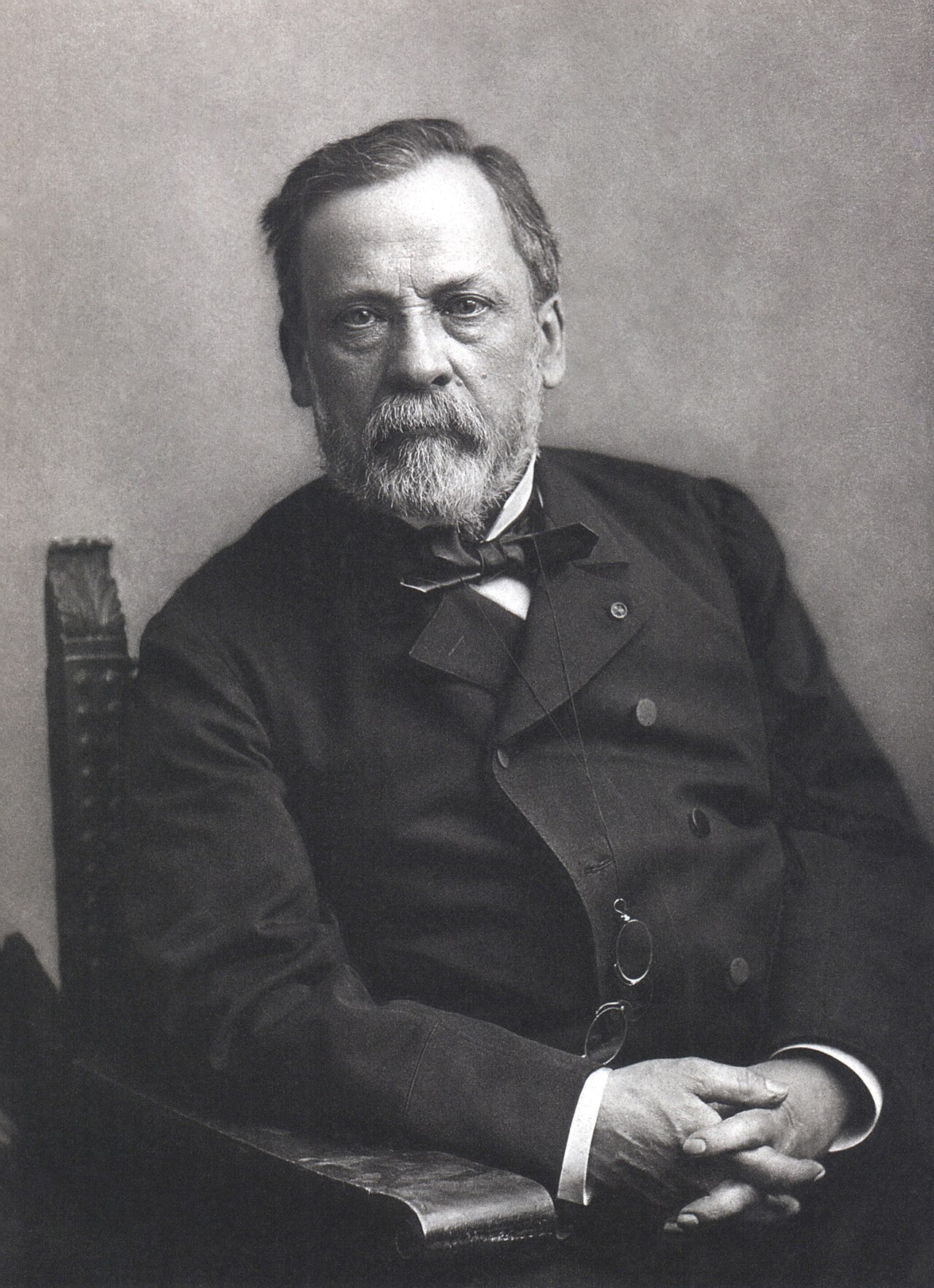
Louis Pasteur died near Paris on September 28, 1895, at the age of 72. His health had been fragile for decades. In 1868 a severe stroke paralyzed the left side of his body, and although he recovered, he relied heavily on his assistants for laboratory work afterward. In 1894 a further stroke or uremia left him badly weakened, and he never fully regained his strength. France gave him a state funeral, and he was first buried in the Cathedral of Notre Dame before his remains were moved to a vault beneath the Pasteur Institute, decorated with mosaics showing his achievements.
Pasteur was born in 1822 in Dole, in eastern France, the son of a tanner. He was an unremarkable student at first, more interested in fishing and drawing than in books. Trained as a chemist, he made his name early by studying the crystals of tartaric acid compounds, work that opened the field of optical isomerism. He then turned to fermentation and to microbes. His experiments with swan-neck flasks, in which broth stayed clear unless it touched dust from the outside air, helped overturn the old idea of spontaneous generation and earned him a prize from the French Academy of Sciences in 1862.
In the 1880s his laboratory moved into vaccines. In 1881 he staged a public demonstration of an anthrax vaccine on sheep, goats, and cattle at Pouilly-le-Fort. In July 1885 he treated nine-year-old Joseph Meister, who had been mauled by a rabid dog, with a series of 13 inoculations, and the boy survived. People soon traveled from abroad, including children from the United States, to receive the treatment.
Why it matters
Pasteur’s work gave strong support to the germ theory of disease and laid foundations for hygiene, public health, and much of modern medicine. The process of heating milk and wine to stop bacterial contamination still bears his name, and his vaccines against rabies and anthrax are credited with saving many lives. The Pasteur Institute, which he founded in 1887 and directed until his death, remains a center of research.
His reputation has also been reassessed. Historians who studied his private notebooks found that he gave misleading accounts of some experiments, including the anthrax vaccine he showed at Pouilly-le-Fort, which relied on a method close to that of his rival Henry Toussaint.
Did you know?
Pasteur was not a licensed physician, so treating Joseph Meister put him at risk of prosecution. The treatment’s success ended the matter.