1999
The G20 is founded
After a wave of financial crises, rich-country finance ministers created a wider forum that grew into the main venue for global economic cooperation.
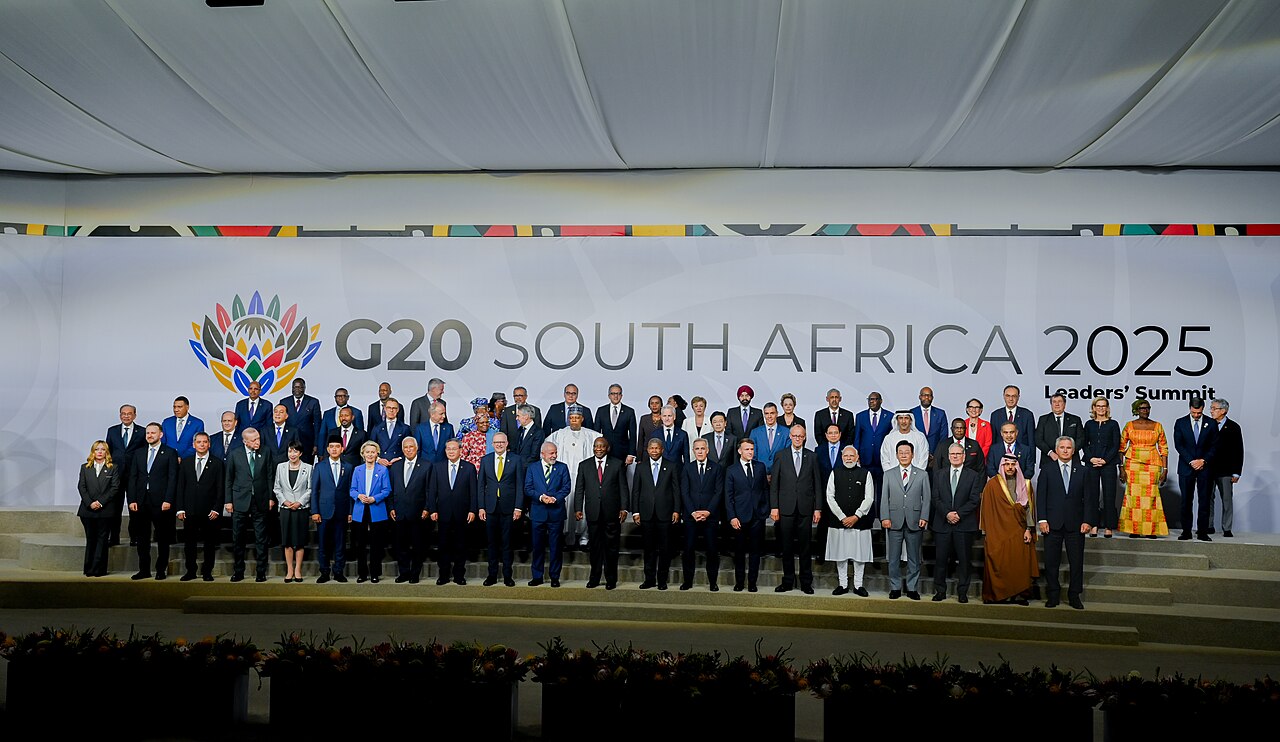
The Group of 20 was formally established at a meeting of the G7 finance ministers on September 26, 1999. The idea had been foreshadowed at the G7’s Cologne summit in June, and the new body held its first meeting in Berlin on December 15 and 16 of that year. Canadian finance minister Paul Martin became its first chairman, and his German counterpart, Hans Eichel, hosted the gathering.
The G20 grew out of the turmoil of the late 1990s. Debt crises had swept through emerging markets, beginning with the Mexican peso crisis and followed by the 1997 Asian financial crisis and the 1998 Russian crisis. The shock even reached the United States with the collapse of the hedge fund Long-Term Capital Management. Martin and US Treasury Secretary Larry Summers concluded that the G7 and the Bretton Woods institutions could no longer keep a globalizing economy stable alone. They wanted a broader, permanent group that would give large emerging economies a voice and a share of responsibility. Accounts differ on who deserves the most credit: one report pointed to Eichel, while others name Martin as the chief architect.
Why it matters
For its first decade the G20 met mainly at the level of finance ministers and central bank governors. The 2008 financial crisis changed that. Leaders held their first summit in Washington that year, met twice a year in 2009 and 2010, and have met annually since 2011. At the 2009 summit the group declared itself the primary forum for international economic and financial cooperation.
The membership includes 19 countries, the European Union, and, since 2023, the African Union. The 19 member states account for about 85 percent of world economic output and 75 percent of international trade. Analysts credit the forum with considerable global influence. Critics fault its limited membership and its lack of enforcement powers, and its summits regularly draw protests.
Did you know?
The original list of members was drawn up by two deputies, Caio Koch-Weser of Germany and Timothy Geithner of the United States, who went through countries one by one before sending their list to the other G7 ministries.