1960
Kennedy and Nixon face off in the first televised debate
In a Chicago TV studio, a young senator and a sitting vice president held the first televised presidential debate and changed how campaigns are won.
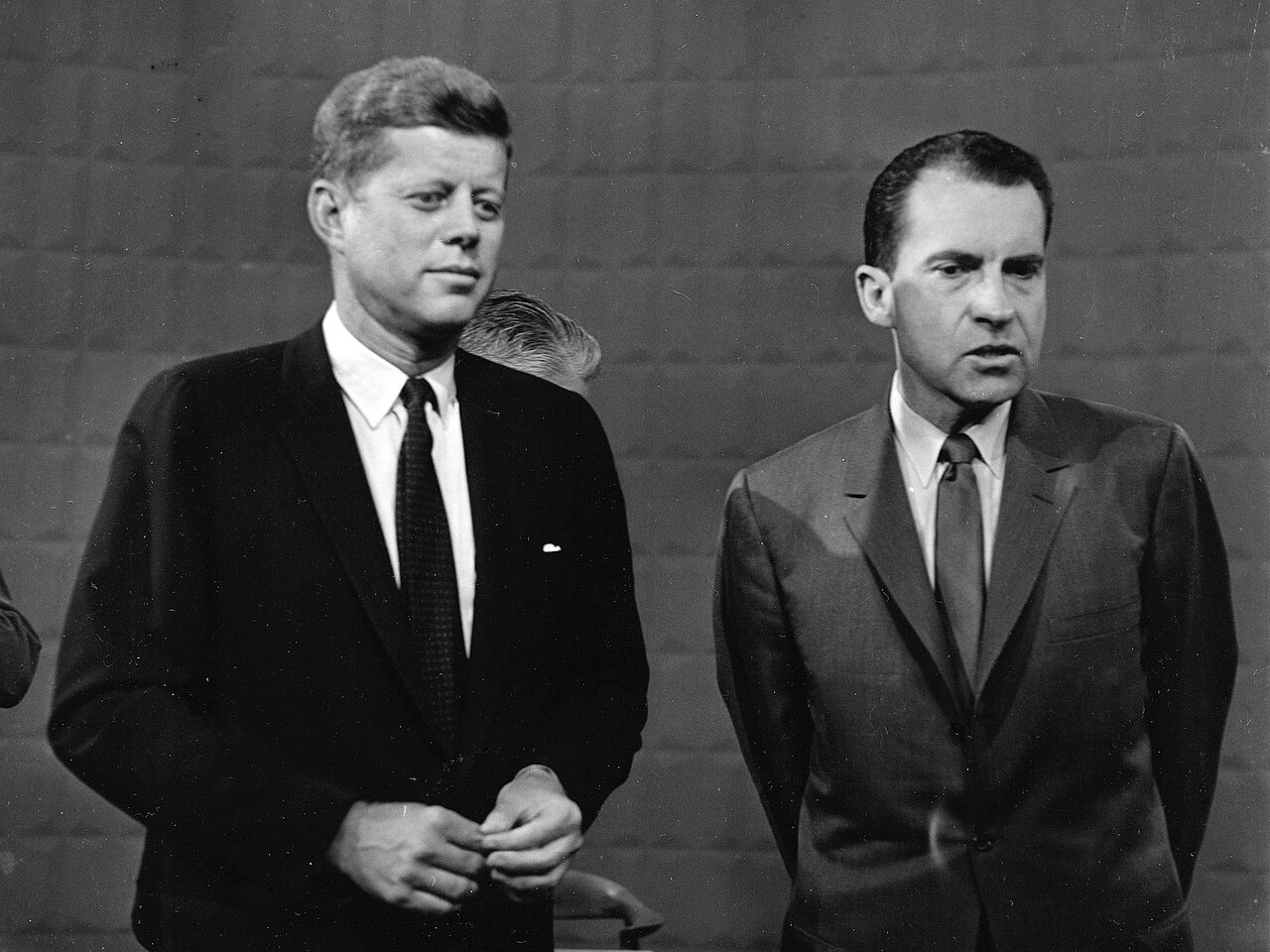
On Monday, September 26, 1960, Vice President Richard Nixon and Senator John F. Kennedy of Massachusetts met at the WBBM-TV studios in Chicago for the first of four debates. Nixon was the Republican nominee, with Henry Cabot Lodge Jr. as his running mate. Kennedy led the Democratic ticket with Lyndon B. Johnson. Most polls after the party conventions had given the Republicans a lead of about six points.
Howard K. Smith of CBS moderated, and four journalists served as panelists. The questions were limited to domestic matters. Each candidate gave an eight-minute opening statement, answered questions in two and a half minutes, could offer a rebuttal, and closed with three minutes of remarks. Kennedy had rested and prepared carefully, and he looked tanned and relaxed. Nixon had campaigned until hours before airtime and was still recovering from a hospital stay for an infected knee. He declined makeup, so his stubble showed on black-and-white screens, he sweated under the studio lights, and his light gray suit blended into the set. Some estimates put the audience at 70 million viewers, though the Commission on Presidential Debates cites lower figures.
Why it matters
Observers at the time judged that Kennedy won the first encounter. Nixon wore makeup and looked stronger in the next three debates, but after weeks of a statistical tie, Gallup polls in October showed Kennedy pulling slightly ahead. He won one of the closest elections in American history, taking the Electoral College 303 to 219 with a popular vote margin of just 0.17 percent.
The debates were the first ever held between presidential candidates, and the first on television. A popular story claims that radio listeners thought Nixon won while television viewers favored Kennedy. The survey behind that idea was thin, and researchers have questioned it. Even so, the night became a lasting lesson in how image and presence matter on screen. No other presidential debates took place until 1976, and since then they have been a regular part of every campaign.
Did you know?
Nixon looked so unwell on camera that his mother phoned him right after the broadcast to ask whether he was sick.