1960
The Flintstones premieres
Hanna-Barbera's Stone Age family arrives on ABC as the first animated series in prime time, and the first animated sitcom on television.
At 8:30 p.m. Eastern time on Friday, September 30, 1960, ABC aired the first episode of The Flintstones. Viewers met Fred and Wilma Flintstone and their neighbors Barney and Betty Rubble, two couples living in Bedrock, a Stone Age town that looked a lot like a postwar American suburb. Their appliances were powered by animals, their cars were wooden and stone frames driven by running feet, and their small domestic quarrels were resolved by the end of each half hour.
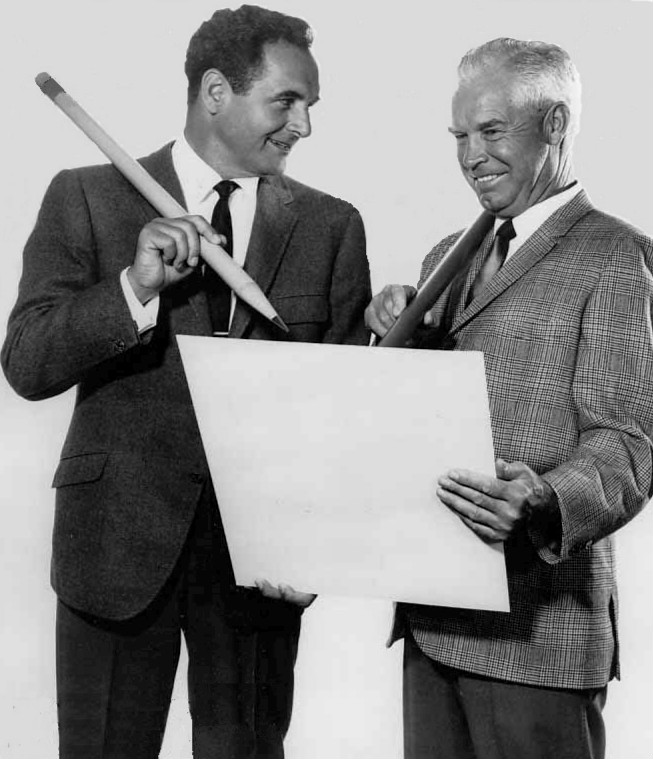
The show came from William Hanna and Joseph Barbera, who had already won seven Academy Awards for their Tom and Jerry cartoons. Their challenge was to build a full 30-minute story around a family, in the manner of the live-action sitcoms of the day. They considered hillbillies, ancient Romans, and pilgrims before choosing the Stone Age, and the idea passed through the working titles The Flagstones and The Gladstones. Hanna openly cited The Honeymooners as a model. Selling the concept was hard: Barbera pitched it for eight weeks, sometimes five times a day, before ABC bought it in 15 minutes on his last day in New York.
The series was aimed at adults at first. It used a laugh track, hired writers from live-action comedy, and was co-sponsored in its first two seasons by Winston cigarettes, whose commercials featured the characters. Although it was produced in color, ABC broadcast it in black and white until the third season.
Why it matters
The Flintstones was the first animated series to hold a prime-time slot and the first animated sitcom, and it quickly became a hit. In 1961 it became the first animated show nominated for the Primetime Emmy Award for Outstanding Comedy Series. Later seasons also tried story arcs, including the birth of Pebbles and the Rubbles’ adoption of Bamm-Bamm, which made it the first animated series to address infertility, if only subtly.
Its original run ended on April 1, 1966, but reruns continued for five decades. For three decades it was the most financially successful and longest-running animated series on network television. Its blend of modern everyday worries with a prehistoric setting, and its mix of visual and verbal comedy, was widely imitated. In 2013, TV Guide ranked it the second greatest TV cartoon of all time, behind only The Simpsons.
Did you know?
Hanna and Barbera first planned to give Fred and Wilma a son, Fred Jr. The couple started the series childless, and when a baby finally arrived in the third season, the head of marketing pushed for a girl instead of a boy because girl dolls sold better.