1947
Pakistan joins the United Nations
Little more than a month after independence, Pakistan takes its seat at the UN, the start of a long role in its diplomacy and peacekeeping.
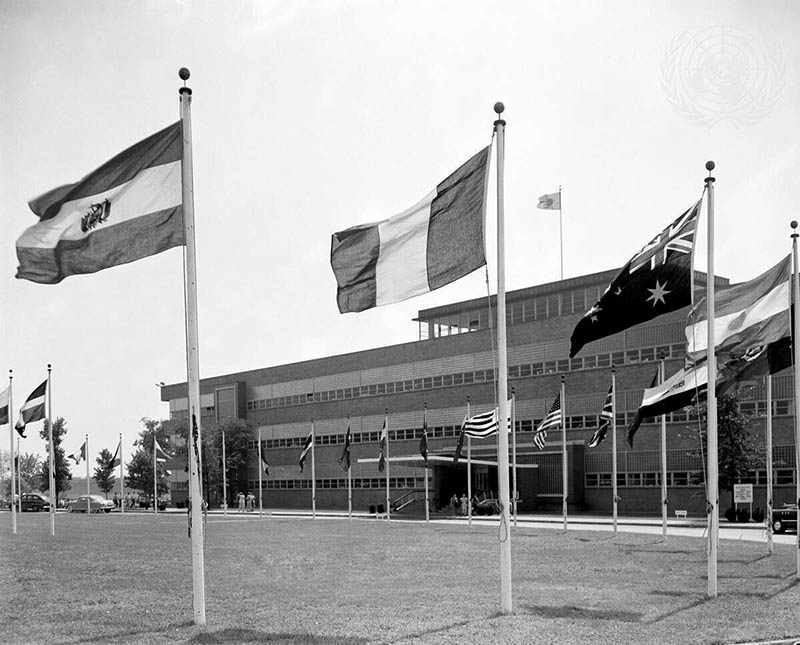
On September 30, 1947, Pakistan formally became a member of the United Nations. The country had existed for little more than a month. It was born in August 1947 from the partition of British India, and its leaders moved quickly to secure a place among the world’s sovereign states.
The path to membership ran through the Security Council. In August 1947 the council reviewed applications from 12 countries, among them Ireland, Italy, Portugal, and Austria, and recommended only two for admission: Pakistan and Yemen. When the General Assembly took up the question, one country voted against Pakistan: the Kingdom of Afghanistan, which objected to the new state. Afghanistan withdrew its negative vote in October 1947, and the two neighbors established diplomatic relations the following year.
Pakistan’s first foreign minister, Muhammad Zafarullah Khan, headed its delegation at the General Assembly that October. He spoke for the position of the Muslim world on the question of Palestine and chaired a subcommittee on the issue, the start of a long career at the international level.
Why it matters
Membership gave Pakistan a stage almost at once. Soon afterward, India took the dispute over Jammu and Kashmir to the UN, which passed resolutions aimed at restoring peace and preparing a referendum, and deployed a military observer group to supervise the ceasefire. The UN has followed the conflict ever since.
Pakistan also became one of the UN’s most active members in the field. Its troops first served in a peacekeeping mission in the Congo in 1960 and went on to take part in 46 missions in 29 countries, including Somalia, Sierra Leone, Bosnia, and Liberia. In 2009 Pakistan was the largest contributor of troops to UN peacekeeping in the world. The country maintains permanent missions to the UN in New York and Geneva and takes part in its agencies for development, food, health, children, and refugees.
Did you know?
Zafarullah Khan later presided over the UN General Assembly and, from 1970 to 1973, over the International Court of Justice. He is the only person to have led both bodies.