1959
Enrico De Nicola dies
The Neapolitan lawyer who guided Italy from monarchy to republic, serving as its first head of state and first president, died at 81.
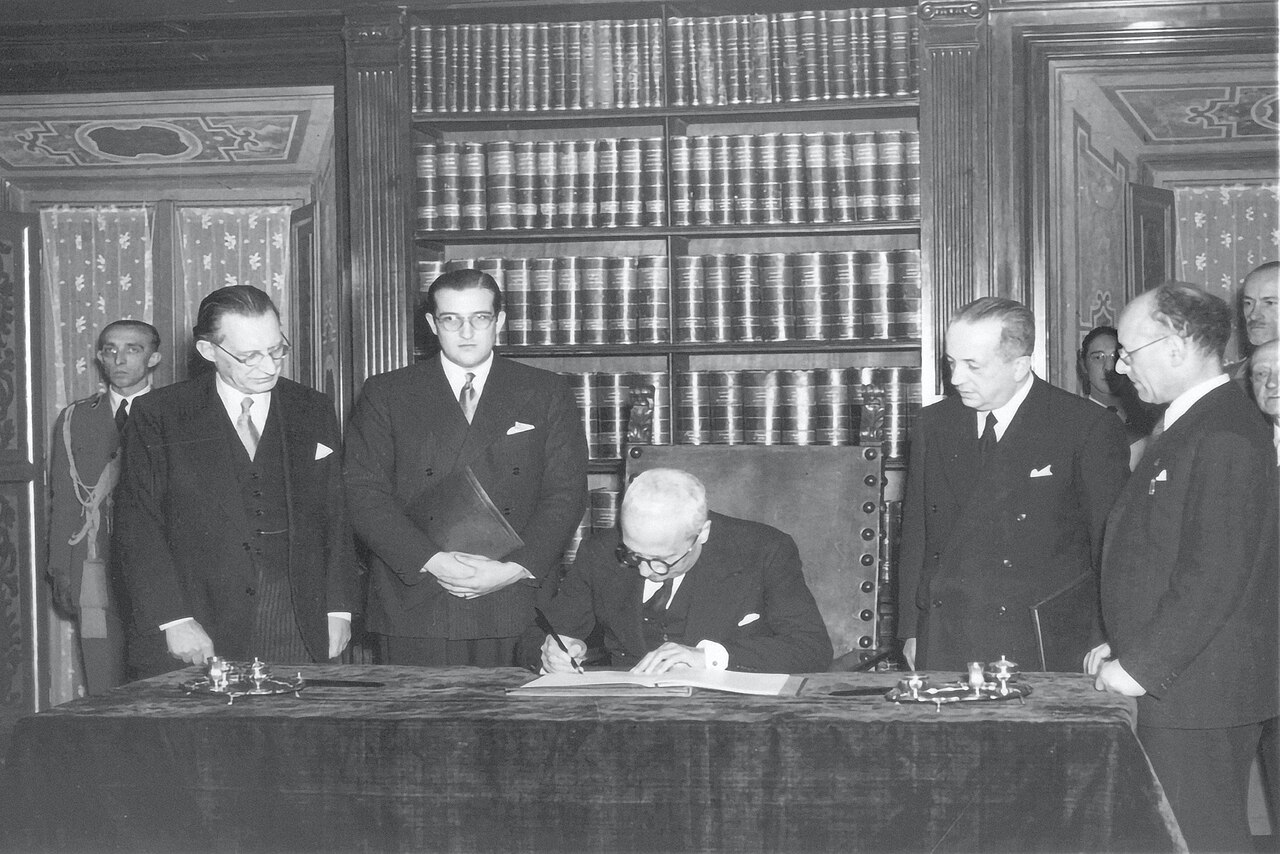
Enrico De Nicola died on October 1, 1959, at Torre del Greco, near Naples, at the age of 81. He had been the first head of state of republican Italy and, from January 1, 1948, the first to hold the title of President of the Italian Republic. He never married and had no children.
Born in Naples in 1877, De Nicola studied law at the University of Naples and became a well-known criminal lawyer. He entered parliament as a Liberal in 1909, held junior posts in the treasury and colonial ministries, and in 1920 was elected speaker of the Chamber of Deputies, a post he kept until January 1924. When fascism took hold, he withdrew from political life. King Victor Emmanuel III appointed him a senator in 1929, but De Nicola refused to take his seat and returned to his law practice.
He came back to politics after the fall of Benito Mussolini in 1943, when he became perhaps the most influential mediator in the monarchy’s effort to separate itself from fascism. Italians then voted in a referendum to abolish the monarchy, and on June 28, 1946, the new Constituent Assembly elected De Nicola provisional head of state, with 80 percent of the votes on the first ballot. He hesitated before accepting, changing his mind several times as party leaders pressed him. In June 1947 he resigned, citing his health, and the assembly re-elected him the very next day.
Why it matters
De Nicola presided over the birth of the Italian Republic. He held office while the Constituent Assembly wrote the new constitution, and in December 1947 he signed it. When it took effect on January 1, 1948, he became formally the first President of the Italian Republic. He then declined to run in the first election under the new charter, and Luigi Einaudi succeeded him that May.
His service did not end there. As a former head of state he became a senator for life, and he was elected president of the Senate and also led the Constitutional Court. Over his career he headed the lower house of parliament, the state, the upper house, and the highest constitutional court.
Did you know?
De Nicola’s hesitation in 1946 drew a memorable public plea. Giulio Andreotti later recalled that a journalist published an appeal begging him, in effect, to decide whether he could accept to accept the job.