1830
Belgium declares independence
After weeks of rioting and street battles in Brussels, a provisional government declared the southern provinces free of Dutch rule.
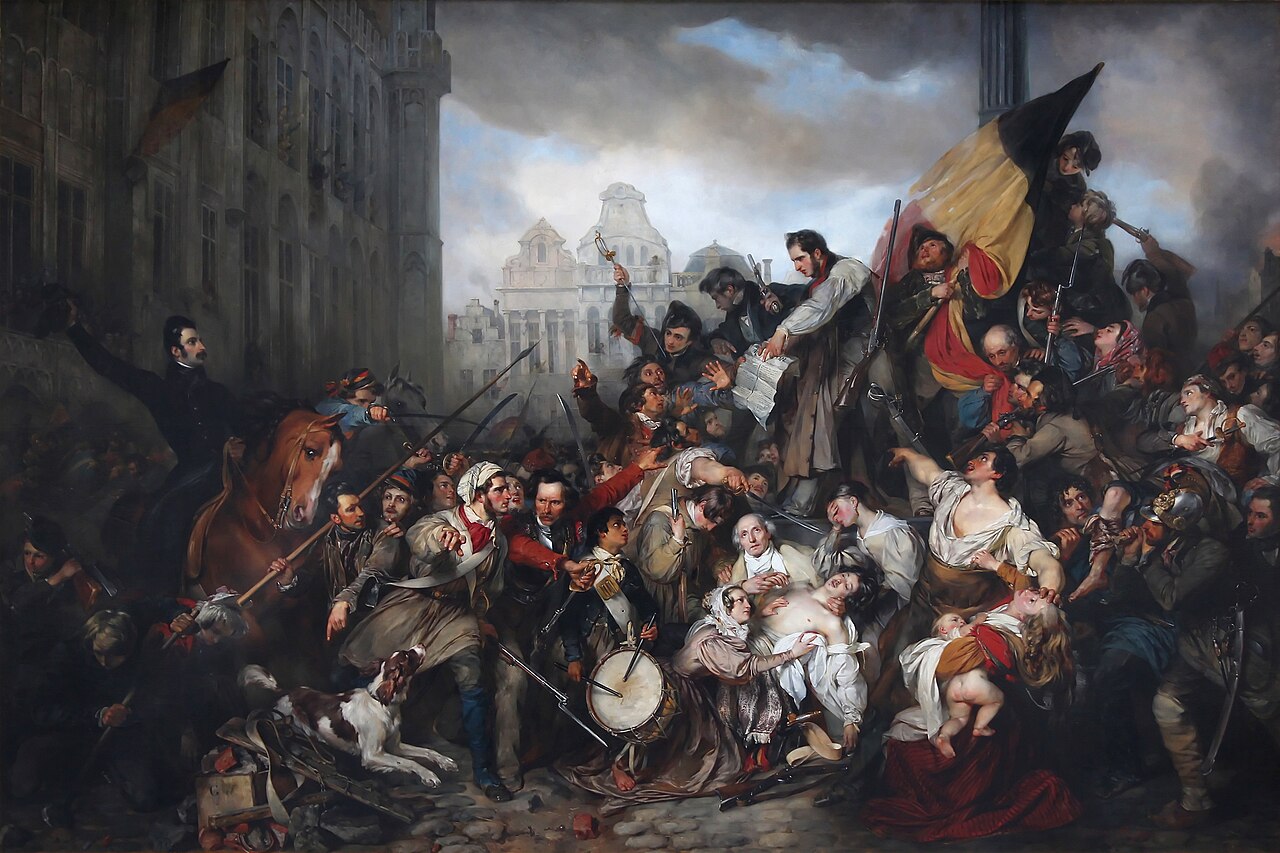
On October 4, 1830, the Provisional Government in Brussels issued a declaration of independence for the southern provinces of the United Kingdom of the Netherlands. The new authority, led by Charles Rogier, had formed only days earlier, and it called for a National Congress to write a constitution for the country that would become Belgium.
The kingdom it broke away from was barely 15 years old. After Napoleon’s defeat at Waterloo, the Congress of Vienna joined the former Dutch Republic with the former Austrian Netherlands under King William I of the House of Orange-Nassau, creating a buffer state on France’s northern border. The union never sat comfortably. The south was largely Catholic and the north Protestant. The southern provinces held about 62 percent of the population but only half the seats in the assembly, most institutions were based in the north, and Dutch became the only language of the army. Many liberals saw William’s rule as despotic, while unemployment and industrial unrest troubled the working classes.
The spark came on August 25, 1830, at the Théâtre de la Monnaie in Brussels. After a patriotic duet in Daniel Auber’s opera La Muette de Portici, many in the audience poured into the streets and joined riots that were already under way. Unrest spread to other towns. In late September about 8,000 Dutch troops under Prince Frederik tried to retake Brussels but were driven back after four days of bloody street fighting, and they withdrew to the fortresses of Maastricht, Venlo, and Antwerp.
Why it matters
The great powers met in London in December 1830 and came to accept the new state. Belgium adopted its constitution in February 1831, and on July 21, 1831, Leopold of Saxe-Coburg swore his oath as its first king, a date Belgians celebrate as their National Day. William I tried to reverse the outcome with the Ten Days’ Campaign in August 1831, but French troops forced the Dutch to pull back.
The Netherlands formally recognized Belgium only with the Treaty of London of 1839, which also declared the country neutral. When Germany invaded Belgium in August 1914 and dismissed the treaty as a “scrap of paper”, Britain declared war the same day.
Did you know?
During one street fight, the rebels lashed their new flag to a standard with shoelaces and used it to lead a counter-charge against the Dutch forces.