1669
Rembrandt dies
The Dutch master of light, shadow, and the self-portrait died in Amsterdam at 63, poor and bereaved but still painting some of his greatest work.
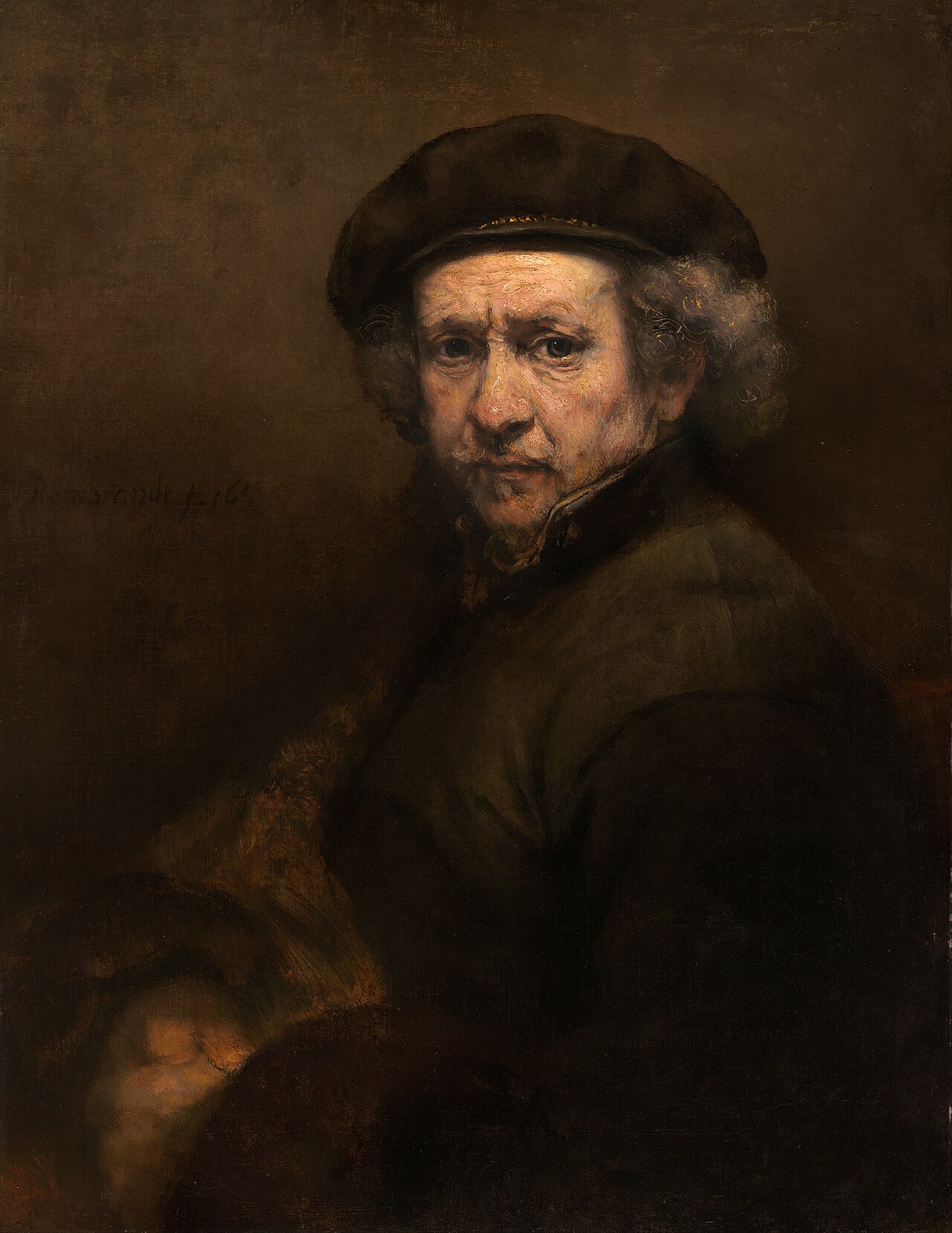
Rembrandt Harmenszoon van Rijn died in Amsterdam on Friday, October 4, 1669, at the age of 63. Four days later he was buried in a rented grave in the Westerkerk. He had outlived his wife Saskia, his companion Hendrickje Stoffels, and his son Titus, and he spent his last years in modest lodgings on the Rozengracht, far from the grand house he had once owned.
He was born in Leiden in 1606, the ninth child of a miller. After a brief spell at the university there, he trained as a painter, opened a studio with his friend Jan Lievens, and caught the attention of the statesman Constantijn Huygens, who helped him win commissions from the court at The Hague. In 1631 he moved to Amsterdam, then a booming center of trade, and quickly became a sought-after portraitist. In 1642 he completed the vast group portrait of a civic militia company known as The Night Watch.
Success did not last. Rembrandt spent freely on art, prints, and curiosities, and the mortgage on his house on the Breestraat became a heavy burden. In 1656 he declared himself insolvent and surrendered his possessions, and his collection and house were sold in the following years. To keep him working, Hendrickje and Titus set up an art dealing business that employed him. Even so, his late years produced The Jewish Bride, the Syndics of the Drapers’ Guild, and a final run of searching self-portraits. Cosimo III de’ Medici of Tuscany visited him twice and took one of those self-portraits home to Florence.
Why it matters
Rembrandt is widely ranked among the greatest artists in Western history. About 300 paintings, close to 300 etchings, and several hundred drawings by him survive, covering portraits, landscapes, biblical scenes, myths, and studies of animals. His dramatic handling of light and shadow, the natural movement of his figures, and his deep sympathy for ordinary people set him apart from the more formal painters of the Dutch Golden Age.
His self-portraits, more than 40 of them in oil, trace his face from a confident young man to a weathered old one and read almost like an autobiography. For two decades he also trained many important Dutch painters, and his etched landscapes shaped how printmakers treated the subject until the late 19th century.
Did you know?
The Night Watch is not a night scene. The painting looks dark because its surface has aged, and it shows a militia ceremony rather than a patrol.