1601
Louis XIII is born
The first son of Henry IV was born at Fontainebleau. As king, he and Cardinal Richelieu laid the foundations of absolute monarchy in France.
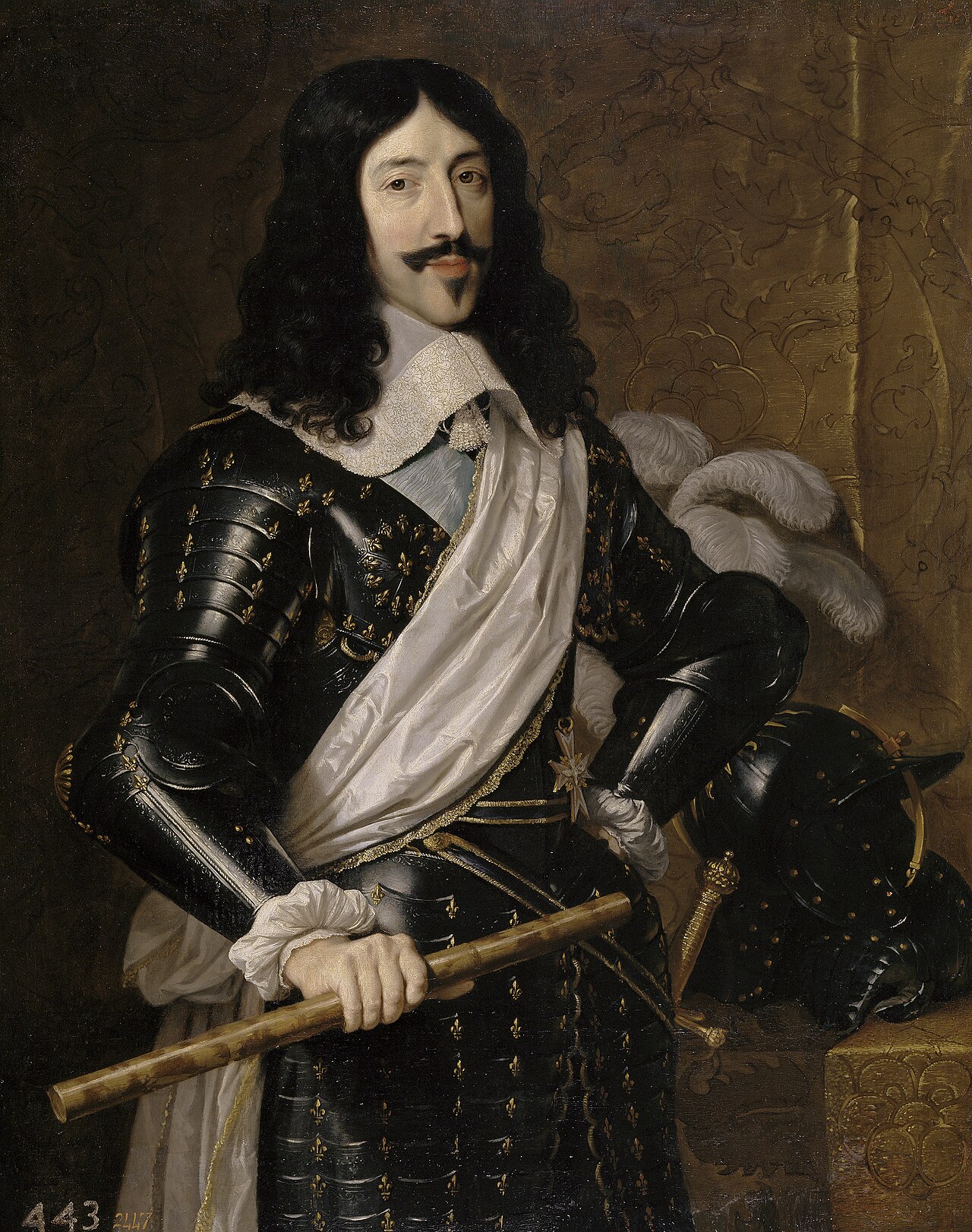
On September 27, 1601, Queen Marie de’ Medici gave birth to a son at the Palace of Fontainebleau. The boy was the eldest child of King Henry IV, the first French king of the House of Bourbon, and as heir to the throne he took the title of Dauphin. Royal governess Françoise de Montglat and the physician Jean Héroard watched over his upbringing, and Héroard’s records show the prince playing the lute for his mother when he was only three.
His childhood ended abruptly. In 1610, shortly before his ninth birthday, Louis became king of France and Navarre after his father was assassinated. His mother ruled as regent, and even after he formally came of age at 13, she kept real power and leaned on her Italian favorite, Concino Concini. In 1617, at 16, Louis broke with her. Concini was killed during an attempted arrest, and Marie was sent into exile at Blois.
Louis was reserved and suspicious, and he had a severe stutter that a visiting English ambassador described in vivid detail. He relied heavily on strong ministers, first Charles d’Albert, Duke of Luynes, and from 1624 Cardinal Richelieu. Together, the king and the cardinal fought Huguenot rebels, besieged and took the Protestant stronghold of La Rochelle, tore down the castles of defiant nobles, and took France into the Thirty Years’ War against the Habsburgs.
Why it matters
The reign that began with this birth turned France into one of the earliest examples of an absolute monarchy. Louis and Richelieu tamed the great nobles, condemned private violence such as dueling, and established the Académie française. Overseas, Louis backed the growth of New France along the Saint Lawrence River and the colonization of Acadia.
His long-awaited heir, born in 1638 after 23 years of marriage to Anne of Austria, became Louis XIV, who inherited the stronger monarchy his father had built. Louis XIII himself lives on in popular culture as the bored, sour king of Alexandre Dumas’s The Three Musketeers, overshadowed by Richelieu.
Did you know?
Louis XIII composed music as well as ruling. In 1635 he wrote the music and the libretto for the “Ballet de la Merlaison,” designed its costumes, and danced in two of its performances.