1973
The Yom Kippur War begins
On the Jewish holy day of Yom Kippur, Egypt and Syria launch a surprise attack on Israel, starting a war that later opened the way to peace.
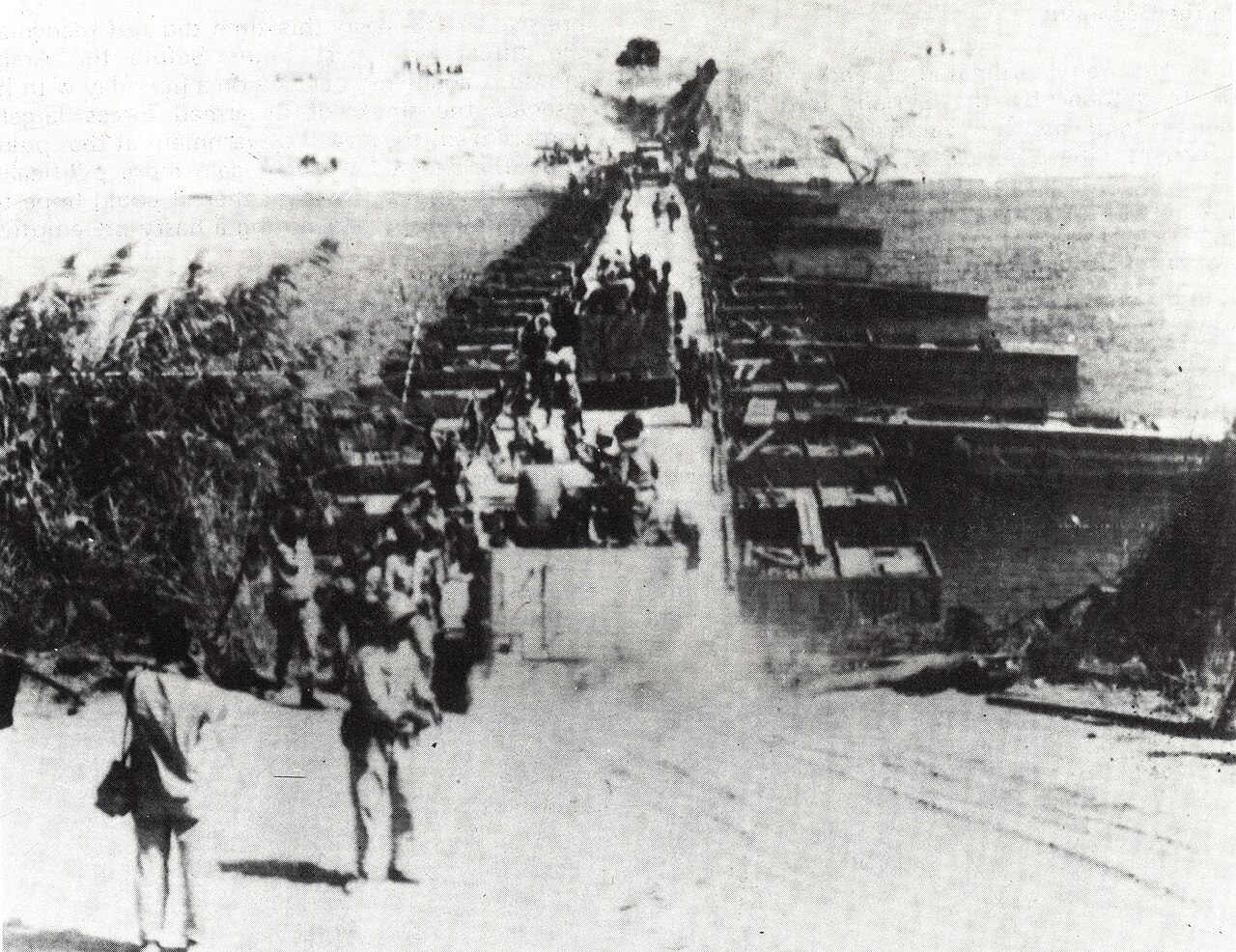
On October 6, 1973, Egypt and Syria attacked Israel on two fronts at once. The date was Yom Kippur, the Jewish Day of Atonement, which that year fell on the 10th day of Ramadan. The fighting centered on the Sinai Peninsula and the Golan Heights, territories Israel had captured from Egypt and Syria in the Six-Day War of 1967.
In Israel, Prime Minister Golda Meir met Defense Minister Moshe Dayan and Chief of Staff David Elazar at 8:05 that morning, about six hours before the war started. She approved a large call-up of reserves but rejected Elazar’s proposal for a preemptive strike, reasoning that Israel would need American help and must not be blamed for starting the war.
At 2:00 p.m., Egypt opened Operation Badr. More than 200 aircraft struck Israeli airbases, missile batteries, and command centers, while more than 2,000 artillery pieces pounded the Bar Lev Line along the Suez Canal for 53 minutes. Egyptian infantry crossed the canal and cut through Israel’s tall sand walls with high-pressure water cannons. On the Golan, Syrian divisions with about 28,000 troops and 800 tanks advanced against Israeli brigades of roughly 3,000 soldiers and 180 tanks.
Why it matters
After three days, Israel stopped the Egyptian advance and pushed most Syrian forces back. It then counterattacked toward Damascus and crossed the Suez Canal. A UN-brokered ceasefire on October 22 broke down, and a second one ended the war on October 25. The United States and the Soviet Union rushed weapons to their allies, raising tension between the superpowers, and Arab oil producers answered American support for Israel with an embargo that set off the 1973 oil crisis.
The war changed both sides. Arab countries felt vindicated after the defeat of 1967, while Israelis were shaken by the early reversals. An inquiry followed, public protest grew, and Golda Meir resigned in April 1974. The new balance helped lead to the Camp David Accords of 1978 and the Egypt-Israel peace treaty, in which Israel returned the Sinai and an Arab country recognized Israel for the first time.
Did you know?
Egyptian engineers first tried explosives and bulldozers on the sand barriers along the canal. A junior officer suggested water cannons instead, and Egypt imported the cannons from Britain and East Germany to blast through the walls with water drawn from the canal itself.