1950
China invades Tibet
Chinese troops crossed into Tibetan-held Chamdo, opening a short campaign that crushed Tibet's army and led to its annexation by the People's Republic.
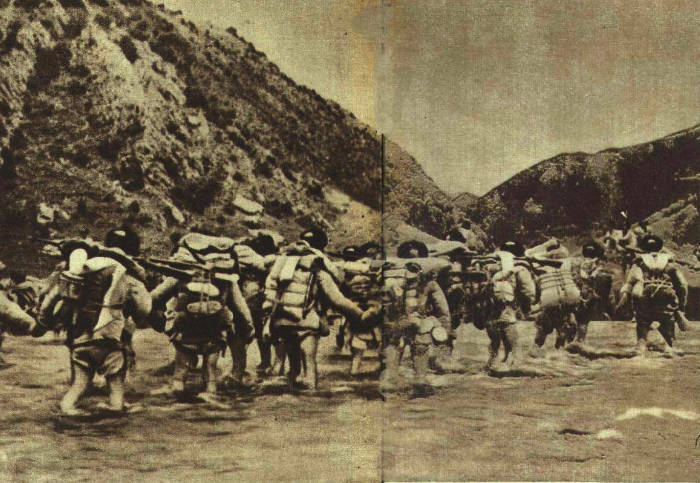
On October 7, 1950, soldiers of China’s People’s Liberation Army crossed the Jinsha River at five points and advanced into the Chamdo region of eastern Tibet. For decades Tibet, governed from Lhasa, had been independent in practice, although both the Nationalist and the Communist governments of China insisted it was part of their country. In September 1949, shortly before the People’s Republic was proclaimed, the Chinese Communist Party listed Tibet among the territories it meant to bring under its control, peacefully or by force. In December 1949 Mao Zedong ordered preparations for a march on Chamdo to push the Tibetan government into negotiations.
Through 1950 the two sides traded proposals while both built up their forces. Tibet was poorly placed to resist. The Dalai Lama was only 15 and not yet ruling, so a regent led the government, and the country had few diplomatic ties abroad. The People’s Liberation Army, fresh from victory in the civil war, had already pushed roads into eastern Kham. When the attack came, two units quickly surrounded the outnumbered Tibetan forces and took the town of Chamdo by October 19. The provincial governor, Ngabo Ngawang Jigme, surrendered with his troops. The PLA disarmed the prisoners, gave them lectures on socialism and a little money, and sent them home. Hostilities ended on October 24.
The campaign was designed less to conquer Tibet outright than to destroy its army in the east and pressure Lhasa to negotiate. Ngabo was sent to Lhasa to carry Beijing’s terms. A month after the invasion, El Salvador sponsored a Tibetan complaint at the United Nations, but India and the United Kingdom kept it from being debated.
Why it matters
The fall of Chamdo left Tibet with little choice. In May 1951 Tibetan delegates in Beijing signed the Seventeen Point Agreement, which accepted Chinese sovereignty, even though they had no authority to sign on their government’s behalf. Chinese troops entered Lhasa later that year. China calls these events the “Peaceful Liberation of Tibet”, while the Tibetan government in exile describes them as an invasion.
The arrangement lasted until the 1959 Tibetan uprising, when the Dalai Lama fled to India and repudiated the agreement, saying he had accepted it under duress. Chamdo was the opening act of a dispute over Tibet’s status that continues to shape relations between China, the Tibetan diaspora, and much of the world.
Did you know?
Days after Chamdo fell, Lhasa told its delegates to accept part of Beijing’s terms, then withdrew even that after a divination before the Six-Armed Mahakala deities warned that the terms would place Tibet under foreign rule.