1849
Edgar Allan Poe dies
Found delirious in a Baltimore tavern days earlier, the master of the macabre died at 40, leaving a mystery about his last days that has never been solved.
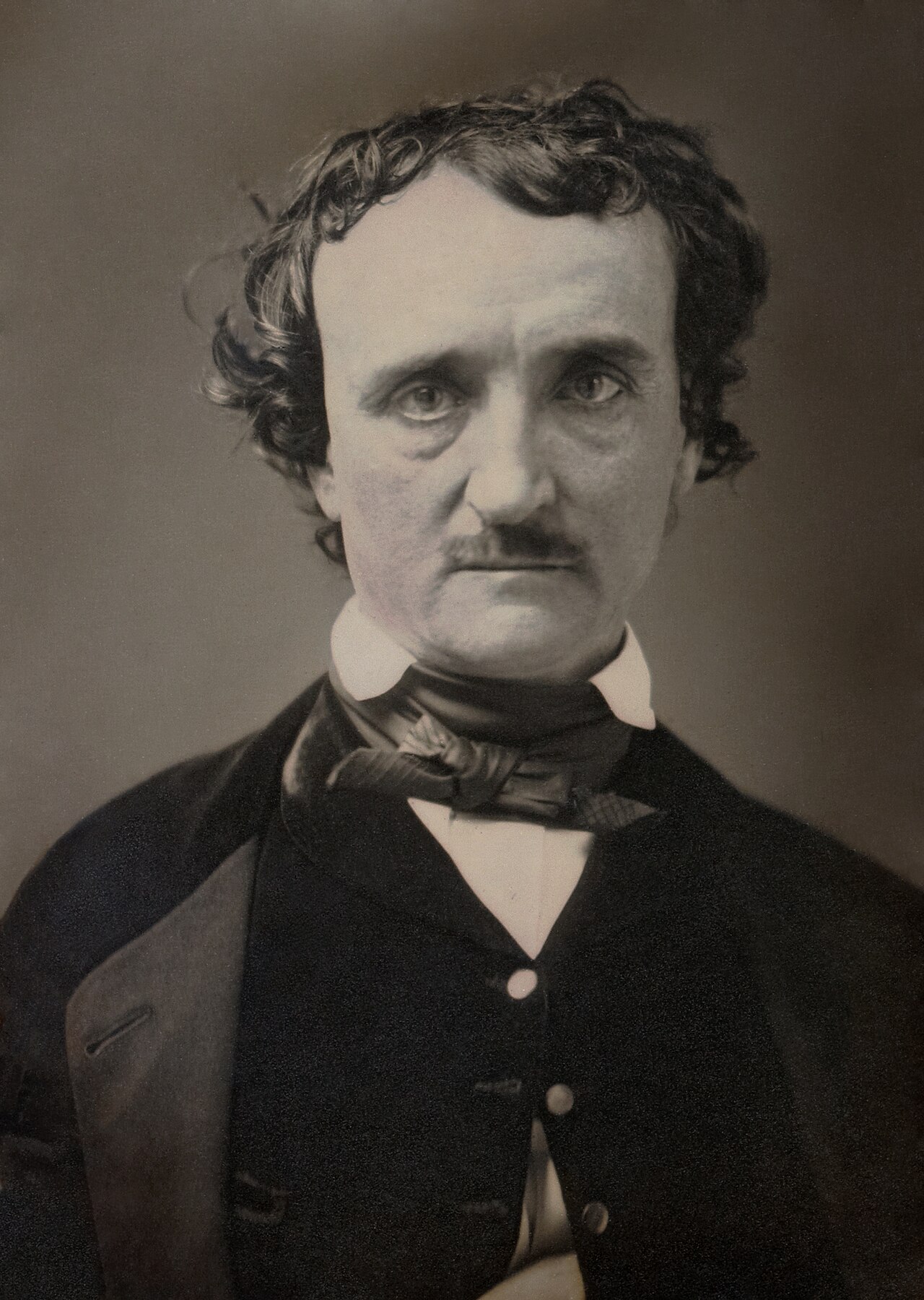
Edgar Allan Poe died in Baltimore on October 7, 1849, at the age of 40. That summer he had spent several weeks in Richmond, Virginia, giving well-received lectures and exploring plans for a magazine of his own. On September 27 he left for his home in New York. Nothing reliable is known about where he went for the next week. On October 3 he turned up delirious at Ryan’s Tavern in Baltimore, which was serving as a polling place on an election day. A printer sent a note asking Joseph E. Snodgrass, an editor who knew Poe, to come and help.
Poe was wearing shabby, ill-fitting clothes that were probably not his own. He was taken to Washington College Hospital, where the physician John Joseph Moran cared for him in a room reserved for drunk patients. He had no visitors and was never lucid long enough to explain what had happened to him. On the night before he died he is said to have called out the name “Reynolds” again and again, though nobody has identified who he meant. His medical records, including any death certificate, have been lost, if they ever existed.
Poe was buried after a small funeral in Baltimore. Within days his literary rival Rufus Wilmot Griswold published a hostile obituary under a pen name, and as Poe’s literary executor he went on to write a memoir that painted him as a depraved, drunken madman. Friends who had known Poe denounced it, and some of the letters Griswold offered as proof were later shown to be forgeries.
Why it matters
Poe left behind poems, tales, and criticism that shaped several genres. He was among the first Americans to make the short story a serious art and one of the first well-known American writers to try to live by writing alone. His Dupin stories laid the groundwork for detective fiction, which is why the Mystery Writers of America call their awards the Edgars, and his work fed into what later became science fiction. “The Raven”, published in January 1845, made him famous almost overnight.
His death remains an open question. Over the years writers have proposed alcohol, cholera, rabies, suicide, murder, and cooping, an election fraud in which gangs forced victims to vote repeatedly in different disguises. Griswold’s portrait, meanwhile, lingered for decades and colored the public image of Poe as a tormented figure.
Did you know?
Poe was paid only nine dollars for the first publication of “The Raven”.